
DJ Software for Mac: The Ultimate Guide to Mixing, Streaming, and Professional Performance
The Mac platform has solidified its position as the gold standard for professional DJing throughout 2025, with an estimated 70-80% of touring and club DJs worldwide relying on macOS-powered systems for their live performances, studio mixes, and creative workflows—a dominance driven not just by Apple’s brand prestige but by tangible technical advantages including Core Audio’s ultra-low-latency architecture delivering sub-10ms response times critical for beatmatching precision, the exceptional stability of macOS preventing the mid-set crashes that terrorize performers, M-series chip performance enabling real-time AI stem separation and effects processing previously impossible on mobile hardware, and an ecosystem of DJ software for mac options spanning free open-source tools through $300+ professional platforms that collectively define modern digital DJing. The landscape transformed dramatically in late 2024 when Spotify returned to DJ software integration after a five-year absence, joining Apple Music as directly streamable sources within apps like djay Pro, Serato DJ Pro, and Rekordbox—a shift fundamentally changing how DJs access music by eliminating the need for massive local file libraries and enabling instant access to 100+ million tracks through subscriptions rather than purchases, though questions about DJ software for Mac free options, whether Serato DJ Pro is free, and which platforms best serve beginners versus professionals persist across forums and DJ communities worldwide. Whether you’re a bedroom producer experimenting with your first controller wondering can you DJ on a Mac with built-in software, an intermediate mobile DJ evaluating DJ software for Mac Apple Music integration for wedding gigs, a hip-hop turntablist researching Serato DJ software for Mac for scratch routines, a club resident considering Rekordbox DJ software for Mac to match venue CDJ systems, or a professional touring artist seeking the absolute best DJ software for Mac regardless of price, this comprehensive 2025 guide examines every platform through hands-on analysis, streaming service compatibility testing, hardware integration assessment, and real-world performance evaluation helping you make informed decisions matching your specific DJing style, experience level, budget constraints, and long-term career goals.
Can You DJ on a Mac? Understanding Mac’s Technical Advantages for Live Performance
Can you DJ on a Mac? Absolutely—in fact, the Mac represents arguably the best computer platform for DJing when considering the complete ecosystem of audio performance, hardware compatibility, software availability, and professional adoption. The technical foundation begins with Core Audio, Apple’s proprietary audio architecture built into macOS that delivers remarkably low latency audio processing—the critical delay between pressing play or moving a fader and actually hearing the result through speakers or headphones. Core Audio achieves typical latencies of 5-10 milliseconds compared to 15-30ms or higher on Windows systems using ASIO drivers, a seemingly minor difference that proves perceptually significant during beatmatching, scratching, and live transitions where even fractional delays disrupt timing and feel.
The M-series chip revolution (M1, M2, M3, and M4 as of 2025) dramatically amplified Mac’s DJ performance advantages through unified memory architecture enabling instant data transfer between CPU and GPU without traditional bottlenecks, exceptional single-core performance critical for real-time audio processing that doesn’t parallelize well across many cores, Neural Engine hardware accelerating AI-powered features like Algoriddim’s Neural Mix stem separation and automated mixing, and remarkable energy efficiency extending battery life for mobile DJing—professional DJs report 6-8 hour gig capability on single MacBook charge compared to 2-3 hours typical of high-performance Windows laptops running DJ software under load.
The macOS stability represents another compelling advantage frequently cited by professional DJs who’ve experienced both platforms—the tightly controlled hardware-software integration, relatively closed ecosystem limiting driver conflicts and malware, and Apple’s quality control standards create computing environment where mid-set crashes occur rarely compared to Windows systems vulnerable to background updates, driver failures, and resource conflicts. The DJ nightmare scenario involves music stopping mid-performance due to system freeze, application crash, or automatic Windows update initiating during live set—while no platform proves immune to technical failures, DJs consistently report greater confidence and fewer disasters on Mac systems properly configured for performance.
The professional adoption creates self-reinforcing advantages where major DJ software developers prioritize Mac optimization, controller manufacturers test extensively on macOS ensuring compatibility, and the ecosystem of tutorials, support resources, and community knowledge bases focuses primarily on Mac workflows. Walking into professional DJ booths at clubs, festivals, and radio stations worldwide, you’ll overwhelmingly encounter MacBook Pros connected to mixers and controllers—this ubiquity means the DJ sitting next to you at the club can troubleshoot issues, the sound engineer understands Mac audio routing, and the replacement computer in emergency situations will almost certainly run macOS rather than Windows.
The hardware compatibility with DJ controllers, audio interfaces, and peripheral equipment generally matches or exceeds Windows support despite Apple’s smaller overall computer market share—manufacturers recognize that DJs disproportionately choose Mac and prioritize driver development accordingly. The plug-and-play USB class-compliant audio standard supported natively by macOS means most modern DJ controllers work immediately without installing separate drivers, while Windows systems often require manufacturer-specific drivers that introduce compatibility issues across OS updates. The Thunderbolt connectivity standard originated by Apple and built into every recent Mac provides high-bandwidth, low-latency connections for professional audio interfaces exceeding USB capabilities when maximum audio quality matters.
However, honest assessment requires acknowledging Mac limitations: the higher purchase price compared to equivalent-performance Windows laptops (typically 30-50% premium), the limited upgradeability of recent Macs with soldered components preventing RAM and storage expansions, the gaming performance lag irrelevant to DJing but relevant for users wanting dual-purpose computers, and occasional software compatibility delays when major macOS updates initially break DJ applications before developers release compatible versions. These downsides prove manageable for dedicated DJs but warrant consideration for users on tight budgets or requiring maximum hardware flexibility.
Does Apple Have DJ Software? Understanding Apple’s Strategic Position
Does Apple have DJ software? Not officially—Apple doesn’t publish dedicated DJ software despite dominating the professional DJ hardware market, instead positioning itself as the platform enabling third-party developers to create best-in-class applications. This strategic approach differs from Apple’s typical vertical integration philosophy where they control both hardware and software (iPhone, Mac, Apple Watch), reflecting the specialized nature of DJ software and the established excellence of existing third-party solutions that Apple realistically couldn’t improve upon without massive investment into niche market.
The closest Apple products to DJ software include Logic Pro, the $200 professional digital audio workstation (DAW) containing features adjacent to live DJing including beatmatching tools, loop libraries, remix capabilities, and audio manipulation—but Logic fundamentally targets music production and recording rather than live performance, lacking the essential DJ features like dual-deck interfaces, real-time BPM syncing across separate tracks, crossfader controls, hot cue systems, and the performance-optimized workflows that distinguish DJ software from production tools. Attempting to use Logic Pro for live DJing proves technically possible but practically awkward, like using Photoshop for video editing—the underlying capabilities exist but the interface and workflow optimization don’t match the task.
GarageBand, Apple’s free consumer-level music creation app included with every Mac, offers even less DJ utility despite containing loops, virtual instruments, and basic audio recording. The absence of dual-deck control, BPM synchronization across independent playback sources, and performance-oriented interfaces makes GarageBand unsuitable for DJing beyond the most casual experimentation—young users have certainly attempted creating DJ-style mixes in GarageBand, but the limitations quickly push serious learners toward actual DJ software.
Apple’s DJ strategy instead focuses on platform enablement through technologies that empower third-party developers: the Core Audio low-latency framework, Metal graphics API accelerating visual interfaces, Neural Engine enabling on-device AI processing, and critically the Apple Music API allowing apps like djay Pro to integrate 100+ million streaming tracks directly into DJ interfaces. This partnership approach delivers better outcomes than Apple developing their own DJ software—companies like Algoriddim, Serato, Pioneer DJ, and Native Instruments possess decades of specialized expertise, relationships with hardware manufacturers, and deep understanding of DJ workflows that Apple couldn’t reasonably replicate.
The Apple Music integration represents Apple’s most significant DJ-related contribution, positioning their streaming service as natural choice for Mac DJs through native integration with the best DJ software for Mac Apple Music compatibility. The flagship example, Algoriddim’s djay Pro, won Apple Design Awards and receives frequent promotion in App Store featuring, effectively functioning as Apple’s unofficial DJ software recommendation despite independent development. This symbiotic relationship benefits both parties—Algoriddim gains Apple’s marketing muscle and platform optimization access, while Apple strengthens macOS appeal to creative professionals and drives Apple Music subscriptions among DJ demographics.
What is the Best DJ Software for Mac? Professional Tier Platforms
What is the best DJ software for Mac? The answer depends critically on your DJ style, hardware ecosystem, streaming preferences, and budget—but four professional platforms dominate in 2025, each excelling in specific scenarios while maintaining excellence across core DJ functionality.
Rekordbox DJ Software for Mac: The Club Standard
Rekordbox DJ software for Mac represents the de facto industry standard for club and festival DJs, developed by Pioneer DJ (the company manufacturing the CDJ and XDJ media players ubiquitous in professional venues worldwide). The software’s fundamental purpose involves preparation and performance: organizing music libraries, analyzing tracks for BPM and key, setting hot cues and memory loops, creating playlists, then either performing directly through Rekordbox on your Mac with controller, or exporting that preparation to USB drives that work seamlessly with venue CDJ systems. This workflow defines modern club DJing—arriving at the booth with USB stick containing your meticulously prepared library, plugging into resident CDJs, and immediately accessing all your cues, loops, and organization without needing to connect your personal laptop.
The ecosystem integration creates Rekordbox’s primary advantage: complete compatibility with Pioneer DJ hardware including CDJ-2000NXS2, CDJ-3000, XDJ-XZ, DDJ controllers, and the newer OPUS-QUAD all-in-one system. The HID mode enables controlling Rekordbox software directly through connected CDJs, transforming club-standard hardware into high-end controllers for your personal library while maintaining the familiar CDJ interface. The cloud library sync (rekordbox CloudDirectPlay) allows uploading your prepared library to Pioneer’s servers, then accessing that preparation on any compatible venue hardware worldwide without physical USB drives—revolutionary capability for traveling DJs or anyone who’s experienced USB drive failure moments before showtime.
The preparation mode sophistication exceeds competitors through features like Related Tracks algorithm suggesting tracks that mix well based on harmonic compatibility and energy profiles, comprehensive playlist organization including smart playlists updating automatically based on criteria, customizable track colors and labels enabling visual organization systems, and remarkably accurate waveform analysis including phrase analysis that identifies musical sections (intro, verse, chorus, outro, breaks) helping DJs structure transitions. Professional DJs often spend hours in Rekordbox preparation before gigs, treating it as essential pre-production rather than just playing random tracks live.
The licensing structure includes free tier (rekordbox 6 free) providing basic library management and limited performance features, Core plan ($10/month or $130/year) unlocking full DJ performance with two decks, and Creative plan ($15/month or $170/year) adding four-deck mixing, DVS control, video mixing, and expanded effects. The Performance mode (included in paid tiers) enables using Rekordbox as performance software with controllers, though most club DJs primarily use Rekordbox for preparation while performing on venue CDJs.
The limitations include somewhat dated interface design compared to sleeker competitors like djay Pro, the subscription pricing model that some DJs resist preferring one-time purchases, the lack of built-in streaming service integration (no Apple Music or Spotify direct access—though 2024 added Spotify support), and occasional stability issues during major macOS transitions before Pioneer releases compatibility updates. However, for DJs aiming toward club and festival careers where CDJ compatibility proves essential, Rekordbox represents non-negotiable software despite any drawbacks.
Serato DJ Software for Mac: The Turntablist’s Choice
Serato DJ software for Mac earned legendary status among hip-hop DJs, turntablists, and scratch artists through industry-leading Digital Vinyl System (DVS) implementation enabling control of digital audio files through traditional vinyl turntables and timecode records. The DVS quality determines whether digital scratching feels natural or exhibits latency and tracking errors ruining the experience—Serato’s decades of refinement created the benchmark that competitors measure against, with scratch DJs worldwide considering Serato the only acceptable choice for serious turntablism despite alternative DVS solutions existing in Traktor and other platforms.
The hardware ecosystem spans enormous range from entry-level DDJ-SB controllers ($250) through professional Rane mixers ($2,000+) to complete DVS setups with Technics 1200 turntables, all officially supported through Serato’s extensive hardware compatibility. The pad integration particularly shines for performance DJs who rely heavily on hot cues, loops, and samples triggered via controller pads—the responsive, color-coded pad systems on Serato-compatible controllers like Pioneer DDJ-SX series or Rane Twelve provide tactile, visual, and timing precision enabling complex juggling routines and finger drumming performances. The Serato Video expansion adds full video mixing capabilities for DJs incorporating visuals into sets, while Serato Flip enables recording and replaying complicated scratch routines and live edits as reusable performances.
Is Serato DJ Pro free? No, the full Serato DJ Pro costs $9.99/month subscription or $249 for perpetual license—however, Serato DJ Lite provides completely free version supporting basic two-deck mixing with compatible hardware, serving as entry point for beginners before upgrading to Pro’s expanded features. The Lite limitations include no recording capability, no effects, no DVS support, limited waveform views, and restrictions on expansion packs—sufficient for learning fundamentals but quickly constraining as skills progress. The upgrade path from Lite to Pro proceeds smoothly with all library preparation and preferences transferring, making the free version genuinely useful rather than frustrating demo.
The expansion pack ecosystem allows purchasing specific features à la carte: Serato FX ($29) adds effects processors, Serato Flip ($49) enables loop recording and instant doubles, Serato Video ($249) unlocks video mixing, Serato DVS ($149) enables timecode vinyl/CD control—this modular approach appeals to DJs wanting to invest gradually in specific capabilities rather than paying for comprehensive feature sets they’ll never use, though the cumulative cost potentially exceeds all-inclusive competitors if purchasing multiple expansions.
The 2024 Spotify integration represents major milestone, finally bringing streaming service access to Serato after years of local-file-only limitation. Spotify Premium subscribers can now browse, search, and load tracks directly from Spotify’s 100+ million track catalog into Serato decks, though the implementation remains newer and less refined than djay Pro’s multi-year streaming integration experience. The preparation workflow expects DJs to organize crates (Serato’s playlist equivalent) before gigs, set cue points on important tracks, and generally maintain curated libraries rather than relying on spontaneous searches through massive catalogs during performances.
The professional reliability represents Serato’s strongest selling point—the software simply works consistently across thousands of gigs, maintains backward compatibility across versions preserving decade-old library investments, and recovers gracefully from errors without catastrophic mid-set failures. The conservative development philosophy sometimes means lagging competitors in cutting-edge features, but delivers the stability that professional DJs prioritize over experimental capabilities.
Traktor Pro: German Engineering for Electronic Music
Traktor Pro from Native Instruments appeals primarily to techno, house, and electronic music DJs who value the software’s technical precision, creative effects, and seamless integration with Native Instruments’ controller ecosystem including the iconic Traktor Kontrol S series. The Stem separation technology (introduced in Traktor Pro 3) enables isolating and manipulating individual elements—drums, bass, melody, vocals—within mixed stereo tracks, creating remix and mashup possibilities impossible with traditional full-track manipulation. The Stems format (specialized multi-track audio files) works alongside regular MP3/WAV files, with Traktor’s AI separation providing real-time stem extraction from standard audio on supported hardware.
The four-deck mixing comes standard in Traktor Pro, enabling complex blends and layering that two-deck systems can’t match—techno DJs routinely run multiple tracks simultaneously, fading elements in and out to create evolving soundscapes rather than discrete song-to-song transitions. The Remix Decks provide loop-based performance capabilities similar to Ableton Live’s clip launching, allowing DJs to build tracks from component loops, samples, and one-shots stored in sample banks. This production-oriented approach blurs lines between DJing and live performance, particularly popular in electronic genres where boundary between pre-made tracks and live creation deliberately blurs.
The effects processors in Traktor exceed most competitors in quality and flexibility, with professional-grade reverbs, delays, filters, and modulation effects plus the Macro FX system enabling one-knob control of complex multi-effect chains optimized for specific impacts (build-ups, breakdowns, filter sweeps). The effects routing flexibility enables applying effects to individual channels, crossfader assignments, or master output with unprecedented control over signal flow—power users create complex effect chains impossible in simpler DJ software.
The hardware integration with Native Instruments controllers delivers plug-and-play perfection where Traktor Kontrol devices work immediately without configuration, with all controls pre-mapped and high-resolution displays showing track info directly on hardware. However, Traktor’s support for third-party controllers sometimes lags Serato and VirtualDJ’s broader compatibility, with MIDI mapping required for non-NI hardware and occasional compatibility gaps with newer controllers.
The pricing at $99 for Traktor Pro 3 (perpetual license) or included with Traktor Kontrol controllers represents excellent value compared to Serato’s $249 license or rekordbox subscriptions. The software occasionally goes on sale for $49-69 during Native Instruments promotions, making it remarkably accessible for its capabilities. The lack of subscription model appeals to DJs preferring one-time purchases, though this means no ongoing revenue stream funding continuous development—Traktor updates arrive less frequently than subscription-based competitors.
The limitations include lack of streaming service integration (no Apple Music or Spotify access), relatively dated interface aesthetics compared to modern competitors, smaller user community compared to Serato/rekordbox making troubleshooting harder, and the sense that Native Instruments’ focus has shifted toward production tools rather than DJ software development. However, the software remains stable, capable, and preferred by techno/electronic DJs valuing its specific strengths.
VirtualDJ: The Versatile All-Rounder
VirtualDJ represents the most versatile and feature-complete DJ software available, supporting video mixing, karaoke, live broadcasting, advanced automation, and more MIDI controllers than any competitor—positioning it as ideal choice for mobile DJs, wedding entertainers, and multi-format performers who need a single platform handling diverse event requirements. The video mixing proves particularly valuable for mobile DJs providing visual entertainment at parties, corporate events, and venues with video screens, with VirtualDJ handling video transitions, effects, and mixing as naturally as audio-only performance.
The karaoke functionality includes songbook management, singer rotation queuing, key changing, vocal removal from non-karaoke tracks, and lyric display features that turn VirtualDJ into complete karaoke hosting system without requiring separate software. Mobile DJs working weddings and private parties frequently encounter karaoke requests, making this integrated capability valuable for maintaining professional service without switching between applications mid-event.
The controller compatibility exceeds all competitors through the most extensive MIDI mapping database in the industry—virtually any DJ controller, even obscure or discontinued models, works with VirtualDJ through either built-in support or community-contributed mappings available through VirtualDJ forums. This universal compatibility appeals to DJs with mixed or budget hardware, those inheriting used equipment, or anyone frustrated by other software’s narrower hardware support.
The licensing structure includes completely free VirtualDJ Home Edition for non-commercial use (home practice, personal parties) with full features but limitations on professional controllers and commercial use, VirtualDJ Pro Infinity ($299 lifetime license) for professional use without restrictions, and various subscription options ($19/month) for users preferring rental models. The free home edition’s generosity enables serious learning and practice without financial investment, with clear upgrade path when beginning paid gigs requiring commercial licensing.
The automation features particularly serve mobile DJs who need reliable auto-mixing for dinner hours, breaks, or moments when stepping away from equipment—VirtualDJ’s Automix intelligently selects and blends tracks based on energy, BPM, and harmonic compatibility, maintaining dancefloor energy without constant manual intervention. The Sampler provides extensive sample triggering beyond hot cues, the Sidechain effects enable ducking vocals under mic announcements automatically, and the **Scratch
engine** delivers surprisingly capable turntablist features despite VirtualDJ’s broader focus.
The professional perception represents VirtualDJ’s primary challenge—the software’s versatility and “does everything” approach sometimes carries perception as “jack of all trades, master of none,” with specialist DJs preferring focused platforms (Serato for scratching, rekordbox for clubs, Traktor for techno) over VirtualDJ’s generalist capabilities. However, this reputation proves outdated given VirtualDJ’s actual performance quality, with bias largely reflecting the software’s visibility in wedding and mobile DJ contexts rather than club environments. Mobile DJs, however, rightfully consider VirtualDJ the industry standard for their specific needs, with the video, karaoke, and automation features providing capabilities unavailable in club-focused alternatives.
Best DJ Software for Mac Apple Music: Algoriddim djay Pro Dominance
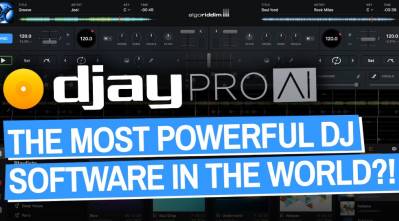
Best DJ software for Mac Apple Music integration unquestionably belongs to Algoriddim’s djay Pro, which offers seamless, native Apple Music streaming directly within its interface—enabling instant access to 100+ million tracks, your personal library, curated playlists, and Apple’s algorithmic recommendations without requiring separate downloads or file management. The integration feels native rather than bolt-on, with Apple Music tracks appearing alongside local files in unified library browser, complete metadata and album artwork displayed, and streaming working reliably even during live performances when internet connections remain stable.
The Neural Mix technology represents djay Pro’s killer feature, using Apple’s Neural Engine (specialized AI processor in M-series chips) for real-time audio source separation that isolates vocals, drums, bass, and harmony as separate controllable elements within any song. This stems capability enables creative techniques like extending acapella sections by muting instrumentation, creating instant instrumentals from vocal tracks, selectively applying effects to only drums or vocals, and building mashups by combining vocals from one track with instrumentals from another—all processing in real-time without pre-rendering or preparation. The quality exceeds older stem separation tools by substantial margin, producing relatively clean separation with minimal artifacts at latencies suitable for live performance.
The Automix AI provides intelligent automatic mixing where djay Pro analyzes track structure, energy, and musical compatibility to select appropriate transition points and blend tracks smoothly without manual intervention—functional for background music during dinner hours at events, practice mixing while learning, or simply enjoying continuous music flow during personal listening. The AI quality improved dramatically with recent updates, now creating reasonably musical transitions that don’t embarrass DJs running Automix during non-critical moments, though professional manual mixing still sounds superior during prime performance periods.
The interface design won Apple Design Awards for good reason, with clean minimalist aesthetic, intuitive gesture controls optimized for trackpad use on MacBooks, full-screen visualizer modes for audience-facing displays, and thoughtful details like waveform color-coding based on track energy. The Mac-native feel throughout means keyboard shortcuts follow macOS conventions, preferences integrate with system settings appropriately, and the overall experience feels polished in ways that cross-platform software sometimes lacks. The iPad version maintains feature parity and synchronizes settings via iCloud, enabling DJs to prep on MacBook then perform on iPad without workflow disruption.
The hardware compatibility spans 100+ controllers officially supported with pre-mapped configurations, plus extensive MIDI learning capabilities for custom mapping unsupported hardware. The Pioneer DDJ controllers, Reloop devices, Hercules range, and Native Instruments Traktor Kontrol series all work excellently with djay Pro despite being marketed primarily for competing software—testament to Algoriddim’s commitment to hardware flexibility. However, the lack of native DVS support disadvantages turntablists who want timecode vinyl control, though this limitation affects small percentage of djay Pro’s target user base.
The pricing at $6.99/month or $49.99/year subscription includes all features plus Apple Music integration (requiring separate Apple Music subscription), while one-time purchase option ($99) provides perpetual license without Apple Music or future major updates. The subscription model enables continuous development funding and regular feature additions, though some users resent ongoing payment obligations for software they’d prefer owning outright. The free trial (7-14 days depending on promotion) provides adequate evaluation period for testing full capabilities before committing financially.
The limitations include relatively basic effects compared to Traktor’s sophisticated processors, less extensive library management than rekordbox’s preparation-focused workflow, no built-in recording functionality beyond exporting performance audio, and the dependency on streaming service subscriptions for accessing headline 100+ million track feature. Additionally, DJ software for Mac Spotify capability arrived in djay Pro during 2024 alongside Apple Music, but Spotify integration remains desktop-only (not available in iOS version) and requires Spotify Premium subscription—creating fragmented feature availability across platforms.
DJ Software for Mac Spotify: The 2024-2025 Integration Revolution
DJ software for Mac Spotify compatibility represents one of 2025’s most significant DJ software developments, with Spotify returning to DJ application partnerships after five-year absence that forced DJs toward alternative streaming services or local file collections. The integration launched late 2024 across djay Pro, Serato DJ Pro, and rekordbox, enabling Spotify Premium subscribers in 51 markets to stream tracks directly into DJ software interfaces with full mixing capabilities including looping, cue points, and effects—functionality identical to locally-stored audio files despite streaming from cloud servers.
The five-year gap (2020-2024) occurred when Spotify discontinued previous API access that enabled DJ software integration, citing platform changes and licensing complexities that made continuation difficult. This withdrawal frustrated DJs who’d built workflows around Spotify’s extensive catalog and algorithmic playlists, forcing migration to Tidal (which continued DJ software support), Apple Music integration in djay Pro, or return to traditional local music libraries purchased through Beatport, iTunes, or record pools. The 2024 return signals Spotify’s recognition that DJ integration drives substantial Premium subscription signups and maintains engagement with music-obsessive demographics likely to become Spotify’s most valuable subscribers.
The implementation quality varies across platforms: djay Pro offers most mature Spotify integration built upon years of streaming service experience through Apple Music implementation, with responsive search, reliable playback, and seamless handling of network variations. Serato DJ Pro added Spotify as relatively recent feature showing occasional rough edges including slower search performance and library browsing lag compared to local files, though reliability continues improving through updates. Rekordbox implemented Spotify alongside existing Beatport/Beatsource streaming integration, maintaining Pioneer DJ’s typical conservative approach prioritizing stability over cutting-edge features.
The desktop-only limitation (as of early 2025) restricts Spotify DJ integration to Mac and Windows applications, with mobile iOS versions of djay Pro and other software lacking Spotify access despite supporting Apple Music streaming. This inconsistency frustrates iPad DJs who’d prefer unified feature availability across devices, though the limitation likely reflects technical challenges with Spotify’s iOS SDK or licensing restrictions specific to mobile platforms. The practical impact affects mobile DJs who prefer iPad setups for portability, forcing continued reliance on Apple Music or local files when performing from iOS devices.
The workflow advantages of Spotify integration include instant access to massive catalog eliminating need for extensive local libraries consuming storage, algorithmic playlist recommendations enabling discovery of mixing-compatible tracks, pre-built playlists for various genres and moods providing ready-made setlists, and the elimination of music purchase costs for DJs willing to work within streaming limitations. The typical DJ spends $30-100+ monthly on track purchases from Beatport, Traxsource, or record pools—a $10.99 Spotify Premium subscription delivering unlimited access represents compelling value proposition despite streaming’s limitations.
The audio quality through Spotify streaming maxes at 320kbps Ogg Vorbis format (or AAC on some platforms), perceptually equivalent to 256-320kbps MP3 and sufficient for most DJ contexts including club playback where venue acoustics, speaker systems, and ambient noise mask subtle fidelity differences. Audiophile DJs and studio purists correctly note that 320kbps lossy compression doesn’t match 16-bit/44.1kHz lossless WAV or FLAC files, though blind listening tests consistently show most DJs can’t reliably distinguish 320kbps from lossless in typical playback environments. The quality proves more than adequate for practical DJing despite not satisfying technical perfectionism.
The offline mode functionality varies by platform but generally allows pre-caching favorite playlists and specific tracks for playback without active internet connection—essential capability for venues with unreliable WiFi, outdoor events lacking connectivity, or backup protection against network failures mid-set. The pre-caching workflow requires planning ahead by marking tracks for offline availability before events, with limitations on total offline storage (typically 10,000 tracks maximum) and requirements for periodic online connection to verify subscription status. DJs should never rely exclusively on streaming for paid gigs without either offline backup or complementary local file collection ensuring music availability regardless of connectivity issues.
DJ Software for Mac Free: Legitimate No-Cost Options
Best DJ Software for Mac Free: Mixxx Open-Source Excellence
Mixxx represents the best completely free, full-featured DJ software for Mac free option, developed as open-source project by global community of programmers and DJs who collectively maintain professional-grade software without commercial licensing restrictions. The software includes comprehensive DJ features: four-deck mixing, master sync, advanced effects processors, extensive library management, harmonic mixing with key detection, vinyl control through Mixxx DVS, recording capability, live broadcasting integration, and support for over 80 DJ controllers—a feature set rivaling $100+ commercial alternatives without requiring payment of any kind.
The open-source philosophy means Mixxx’s development follows community priorities rather than commercial pressures, resulting in deep customization capabilities, rapid bug fixes through collaborative development, transparent code enabling security audits and modifications, and guarantee that software remains permanently free without risk of future monetization. The community includes professional programmers, experienced DJs, and enthusiasts who contribute code, test beta versions, create controller mappings, and support fellow users through forums and documentation—creating sustainable development model that’s thrived over 15+ years.
The limitations compared to commercial software include less polished interface design with functional but utilitarian aesthetics, no streaming service integration (local files only), occasional stability quirks particularly around controller hot-plugging and audio driver conflicts, steeper learning curve due to extensive configuration options, and smaller ecosystem of tutorials and learning resources compared to Serato or rekordbox’s extensive educational content. However, these trade-offs prove acceptable for budget-conscious users, students, hobbyists, and principle-driven DJs who prefer open-source software to commercial alternatives.
The ideal users for Mixxx include absolute beginners learning DJ fundamentals without financial investment, Linux users requiring native DJ software for non-Mac/Windows systems, tinkerers who enjoy customizing and optimizing software configurations, DJs with uncommon or older controllers requiring custom MIDI mapping, and anyone philosophically opposed to software licensing costs. The transition from Mixxx to commercial software proceeds smoothly if later desired, with learned skills transferring completely and library organization importing readily into other platforms.
Serato DJ Lite: Entry Gateway to Professional Ecosystem
Serato DJ Lite provides completely free introduction to Serato’s professional DJ platform, supporting basic two-deck mixing with compatible hardware controllers—perfect entry point for beginners purchasing budget controllers like Pioneer DDJ-200, Hercules DJControl Inpulse series, or Reloop Ready series that include Serato Lite licenses. The software delivers fundamental DJ functionality including beatmatching, EQ controls, basic effects, loop controls, hot cues, and library management sufficient for learning core skills before deciding whether investing in Serato DJ Pro’s $249 full license or $10/month subscription makes sense for advancing capabilities.
The Lite limitations include restriction to two decks (vs four in Pro), no recording functionality preventing capture of practice sessions or mixes, limited effects options (one effect per deck vs Serato FX suite), basic waveform displays without detailed analysis views, lack of DVS support for turntable control, no video mixing capability, and restrictions on using professional-grade controllers that require full Pro activation. These constraints prove sufficient for complete beginners but quickly restrict intermediate DJs developing skills, essentially functioning as try-before-buy system encouraging eventual upgrade.
The upgrade path from Lite to Pro preserves all library preparation, crate organization, cue points, and preferences—meaning time invested learning Serato Lite transfers completely rather than requiring fresh start in new ecosystem. The subscription option ($10/month) enables trying Pro features without large upfront commitment, canceling if Serato doesn’t meet expectations, though the $249 perpetual license delivers better value for committed DJs planning multiple years of use. The occasional 50% off sales during Black Friday or special promotions make perpetual licenses more accessible at $125, significantly improving value proposition versus subscription long-term.
VirtualDJ Home Edition: Full Features for Non-Commercial Use
VirtualDJ Home Edition delivers complete, unrestricted DJ software functionality absolutely free for non-commercial home use—remarkable generosity enabling serious practice, skill development, and hobby DJing without payment while reserving commercial licenses for professionals earning income from DJ services. The free edition includes four-deck mixing, video capabilities, full effects, extensive controller support, recording, broadcasting, sampler, and every feature in VirtualDJ’s extensive toolkit—creating genuinely useful free software rather than crippled trial version pushing immediate paid upgrades.
The non-commercial restriction defines legitimate Home Edition use: personal practice, home parties for friends without payment, content creation for personal YouTube/social media without monetization, and skill development before beginning professional DJ career. Once accepting paid gigs—weddings, clubs, events, parties—the licensing requires upgrading to VirtualDJ Pro subscriptions ($19/month) or perpetual license ($299) for legal commercial use. The honor-system enforcement means technically sophisticated users might abuse free Home Edition for commercial work, though doing so violates terms of service and risks legal consequences beyond mere software licensing violations if discovered.
The ideal scenario involves using VirtualDJ Home Edition during the learning phase (months or years), transitioning to Pro license when beginning to accept paid bookings, thereby enjoying free comprehensive training software while properly licensing professional use. This approach respects VirtualDJ’s business model while maximizing personal benefit—far superior to pirating commercial software or limiting learning to artificially restricted trial versions.
The Myth of “DJ Software for Mac Free Download Full Version” Without Restrictions
Searches for DJ software for Mac free download full version often lead users toward pirated software, cracked applications, or malware-infected downloads disguised as legitimate DJ software—dangerous path that risks Mac security, introduces instability, violates intellectual property laws, and ultimately delivers inferior experience compared to legitimate free options or properly licensed commercial software. The piracy ecosystem includes:
Cracked commercial software with license verification removed through reverse

Editor-in-chief in charge of reviewing an article before it is published on applerepo.com